Sights in Ibiza Town — 18 of Our Favourites

Discover and book the top Ibiza Town sights

archaeological sitearchaeological site of 11th century ibiza at sa capelleta ibiza town

1. Sa Capelleta Archaeological Site

Location
Ibiza Town

Just outside of the Necropolis del Puig des Molins, is a secondary archaeological site. Smaller but extremely interesting the Sa Capelleta interpretive centre depicts the use of one plot of land by three distinct populations of Ibiza over a period of many centuries

Visitors can descend from the walkway above and walk around the ruins themselves, stand on the Islamic street, step through the doorways of the houses, peer down into the wells and roman graves and touch the stones of the Punic shrine. Sa Capelleta is a fascinating glimpse, a slice through the history of one plot on one street of Ibiza town.

Exhibition at Art Projects Gallery, Ibiza Town

2. Art Projects Gallery

Location
Ibiza Town

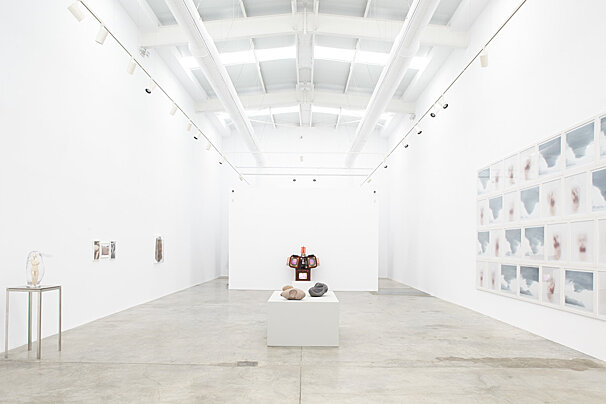
This art gallery showcases some of the best names in contemporary art in Ibiza Town.

From paintings to sculptures, video art, installations and performances, this gallery exhibits contemporary art in all its splendour.

Past exhibitions have featured celebrated names in the current art scene such as Takashi Murakami or Jenny Holzer.

Can Botino, Ibiza Town

3. Can Botino House

Location
Ibiza Town

This historic palace houses nowadays Ibiza's Town Hall and it is a great example of Renaissance architecture in Dalt Vila.

Built in the 17th century by Genovese architects for an Italian family, this house can be accessed via Santa Maria street, although its main façade looks north. It boasts a classical Renaissance style, with symmetry dominating over the display of balconies and windows.

Recently renovated, it now houses the city's town hall and historical archive.

Interior of Madina Yabisa Interpretation Centre, Ibiza Town

4. Madina Yabisa Interpretation Centre

Location
Ibiza Town

This museum is located within one of the oldest houses in Dalt Vila, Casa de La Cúria, built around the old Andalusian wall and shows Ibiza town when it was a medieval Muslim town called Madina Yabisa, an important Muslim city during the Middle Ages.

A joint project by the University of Barcelona and the Ibiza Town Council’s Heritage Department, the Madina Yabisa Interpretation Centre was inaugurated in May 2007.

Using modern audio-visual technology to show the history of the city of Ibiza, especially in the Madina Yabisa area during Muslim rule, this museum shows the islands varied past.

One of the centre’s most outstanding elements is the gallery that houses a scale model of the city’s old fortifications, accompanied by an audio-visual documentary in several languages that show the city’s history and evolution down the centuries.

The drawbridge, Dalt Vila Ibiza

5. Castell de Eivissa (Ibiza Castle)

Location
Ibiza Town

The whole of the Old Town of Ibiza (Dalt Vila) has become an outdoor museum with signs that lead you through the citadel's history and multitude of medieval buildings towards the castle at the centre.

When the Arabs ruled Ibiza (Yebisah) they built a large fortress, much of which is still standing today with buildings that have been built around it. Evidence of the Punic period and the Moorish occupation were discovered in the excavations of the castle.

There are two main defensive structures still standing:

  • The "Baluarte de Sant Jaume" currently has an exhibition on the weapons used to defend the walls of Ibiza, showing visitors how the use of firearms affected the structure of the buildings.
  • The "Baluarte de Sant Pere", on the other hand, houses an exhibition explaining how those walls were built, including a reproduction of Renaissance scaffolds.
Museo Puget (The Puget Museum), Old Town, Ibiza

6. Museo Puget (The Puget Museum), Old Town

Location
Ibiza Town

Just two years before his death in 1981, Ibizan painter Narciso Puget Riquer donated his paintings, plus his fathers to the local government.

They have been displayed ever since in the Puget Museum, the collection is comprised of 130 paintings including oil paintings, watercolours and drawings.

The museum is housed in a beautifully renovated old noble house on the main street, and is as much admired for the gothic architecture and history of the building as it is for the works of art displayed within.

Archaeological Museum Ibiza old town

7. Archaeological Museum, Old Town

Location
Ibiza Town

This museum houses all the history of Ibiza and Formentera from the past 3,000 years.

The museum was founded in 1907 and contains artefacts divided into the following sections: prehistoric, Phoenician, Roman, Punic and Islamic. MAEF (Museu Arqueologic d'Eivissa i Formentera) preserves, researches and exhibits historical material from the Islands of Ibiza and Formentera.

It's housed in a historical building where the government of the island met from the 13th to the 18th century. It was divided into three groups: bourgeoisie, merchants and farmers until the current council was set up in 1717.

The Sacred Heart of Jesus monte cristo ibiza

8. Sacred Heart of Jesus Monument, Monte Cristo

Location
Ibiza Town

Standing at 23 metres in height this impressive monument sits nestled amongst the trees in the small residential village of Monte Cristo just 3.5km to the north of Ibiza Town.

Constructed in 1947, under the instruction of Antonio Cardona Riera (Bishop of Ibiza between 1959 & 1969) it was built to commemorate and give thanks to the local population for giving sanctuary and a place of hiding to Antonio Cardona Riera, known on the island as Frit, during the Spanish Civil War. The late summer of 1936 saw a period of time during the conflict when Ibiza churches had become a target of hate and were set alight and priests were being killed.

The views from this vantage point are great, looking back over the coast to Ibiza Town and the Dalt Vila. It is a very tranquil place and a beautiful spot to relax away from the crowds. Although you might find yourself crowded by the infamous Ibiza cats!

Museum of Contemporary Art of Ibiza, Old Town, Ibiza

9. Museum of Contemporary Art of Ibiza, Old Town

Location
Ibiza Town

A series of vaulted rooms, the museum houses a collection of paintings and engravings made by local and international artists since the 1960's to the present day.

Eivissa Contemporary Art Museum (MACE) was opened in 1969 and has become one of the oldest contemporary art museums in Spain. Now in two parts, the building has been sympathetically renovated to include the old building designed by Simon Poulet, making use of Old Town architecture, and the new building designed by Victor Beltran Roca, which optimises the space available without adding to the already busy urban landscape around.

Along with housing the permanent collection and temporary exhibitions, MACE also has an archaeological site preserved underground which allows visitors to see the structural changes throughout the various centuries, from Phoenician times in the 6th century to Roman times and more recently the Islamic period of the 10th-12th centuries.
The windmill at Puig d'en Valls Ibiza

10. Puig d'en Valls Windmill, East Ibiza

Location
Ibiza Town

When you travel across the island you will see many remnants of windmills, once glorious, and now just a few spokes sticking out from a ruined tower.

However, in Puig d'en Valls, just a few minutes from Ibiza Town you will find a wonderfully restored windmill, originally built in the 18th century and in operation up until the 1940's. It is a flour windmill, with a cylindrical base and walls of at least a meter thick. The promulgation of a decree of ban on food production halted production, as happened with other mills on the island.

Situated on a quiet hillside this is a beautiful place to come and escape the crowds. If you are doing a whistle stop tour of the island by car or moped then this is an absolute 'must see' on you list. With great views back over to the Dalt Vila and Ibiza Town plus a calm and tranquil surrounding make this an ideal picnic place.

Casa Broner, Ibiza Town

11. Casa Broner House

Location
Ibiza Town

Built in 1960, this house, a key piece of modern architecture in Ibiza, was declared of cultural interest in 2000.

Erwin Broner arrived on the White Isle in 1934, fleeing from nazi Germany due to his Jewish origins. He founded the group Ibiza59 together with other artists, and he was known for his architectural creations, mixing traditional Ibizan shapes with contemporary elements. His own house was built between 1959 and 1960 in the fishermen's quarter of Sa Penya, in Ibiza Town.

The house was donated to the town in 2005 by his widow, Gisela Broner. After careful restoration works, it was open to the public showcasing the works of Broner. It has two floors and a garden, with a large window overlooking the sea and a workshop on the ground floor. A small bridge was built over the cliff where the house stands to allow for separate access to both levels.

the exterior of the church in sant jordi

12. Sant Jordi Church, Sant Jordi

Location
Ibiza Town

A 16th century church set in the heart of the town of Sant Jordi, close to both Ibiza town and the Ibiza International airport.

As with most other churches it is fortified to prevent pirate attack and give the towns people a safe hiding place. As well as being a stronghold this church is also beautiful, the huge thick walls, squat structure and bell tower surrounded by battlements are simple in their construction and whitewashed that perfect Balearic white which contrasts beautifully with the dark wood doors, panelling and beams of the porch ceiling. Walls filled with flower boxes surround the church and make a quiet and green place to have a sit down, as does the large covered porch area, built to shelter many people. This beautiful piece of Ibizan architecture is all the more special for its location in the centre of this unremarkable little town.

Ibiza cathedral

13. Catedral de Eivissa (Ibiza Cathedral), Ibiza Old Town

Location
Ibiza Town

Situated at the top of the fortified area within the walls of Ibiza's Old Town (Dalt Vila), the cathedral dominates the square it stands in. 

Historically this area has always been a place of worship, as the first religious building in this spot was a temple by the Carthaginians in the 7th century. The cathedral there today was founded in the 14th century, however not completed until the 16th. Inside is a mixture of Catalan Gothic style and later Valencian influences.

The agreement signed in 1234 by Guillermo de Montgrí, Peter of Portugal and Nuno Sanç, future conquerors of the islands, established as one of the first obligations to create a parish dedicated to Saint Mary in the city of Ibiza. This parish became a reality once the conquest was taken on, on 8th August 1235. At first, it was set up in an already existing building, maybe a Muslim mosque readapted to Christian cult.

The current building owes more to the 16th century, becoming a cathedral in the 18th century.

Inside there are many works of art including two Gothic painted panels by Francesc Cornes from the 14th century.

The views of the sea from here are spectacular.

Punic Necropolis, Puig des Molins, Ibiza

14. Punic Necropolis of Puig des Molins, Old Town

Location
Ibiza Town

This is the largest necropolis in the world, housing up to 4,000 tombs from all over the Mediterranean. The ancient cemetery was set up by the Phoenicians at the end of the 7th century.

There is also a large museum which displays treasures discovered in the burial chambers, including jewellery, mirrors and painted ostrich eggs.

At the close of the 7th century BC, the Phoenicians founded a settlement on the bay of Ibiza which constituted the original core of the city. It was in this period that the lower part of the Puig des Molins began to be used as a necropolis and reached an extension of 10,000 m2.

At the Monographic Puig des Molins Museum the exhibition is organized over five salons and covers the entire period of use of the necropolis. From the question of death in the Phoenician period, including funeral rites, burials and cenotaphs, to Punic funeral rites. This culture was extraordinarily dedicated to the concept of the funeral and the associated rites from the preparation of the body and the funerals linked with burial to the after death cults.

There is also a room dedicated to Roman funeral rituals in Ibiza from the early imperial period until the end of late-Antiquity, and another one displaying the Sainz de la Cuesta Collection.

restaurants in ibiza town

15. Vara del Rey

Location
Ibiza Town

As part of the "new town" this lovely promenade was built in 1912 and named after the Ibizan soldier Joaquin Vara del Ray who was killed in action, whilst bravely fighting against America in 1898. As a dedication, there is a monument in the pedestrianised square opposite Vara del Ray.

Today it's a lovely place to sip your morning hazelnut latte whilst reading the paper and sitting in the sun. There are several restaurants and cafes, all of which have outside seating, perfect for people watching. Plaza del Parque is adjacent to Vara del Ray bordering the old castle walls of Dalt Vila. This is an attractive little square, mainly shaded and lined with restaurants. It's nice for lunch but even nicer in the evenings when you can just have a cold glass of wine and soak in the relaxed atmosphere.

Esglesia de Nostra Mare de Jesus (The Church of Jesus), nr Ibiza Town

16. Esglesia de Nostra Mare de Jesus (Church of Jesus), Jesus

Location
Ibiza Town

This pretty church was founded in the mid 15th century and has been very well preserved. Inside there is an impressive alter painting illustrating significant stages in the life of the Virgin Mary.

The beautiful artwork was done by Valencian artists at the end of the 15th century and consists of over seven main panels and thirteen smaller panels. It was thought to have been of such artistic significance that it was spared damage during the Spanish Civil War.

It has twenty-five different panels. The central one represents the Virgin enthroned nursing Jesus, she is surrounded by images of Saint Peter, Saint Mark, Saint John the Baptist, Saint Francis of Asis, the representation of a saint dressed as a Franciscan and the mass of Saint Gregory. These seven panels, which form the central body, are surrounded by smaller ones, which represent themes such as the Annunciation as well as the Nativity, Resurrection, Ascension, or other saints.

Santa Maria Diocesan Museum of Ibiza & Formentera, Ibiza

17. Diocesan Museum of Ibiza and Formentera, Old Town

Location
Ibiza Town

This museum is filled with religious artefacts related to the area, including paintings, sculptures, ornaments, gold, silver and jewel encrusted clothing.

Founded in 1964, the Santa Maria Diocesan Museum of Ibiza and Formentera was refurbished in 2006 to accommodate a larger collection. The museum's focus is conserving, studying and exhibiting everything relating to the life of the Church on the Islands of Ibiza and Formentera.

Some of the highlights of its collection include a marble tombstone made by a Genovese sculptor in the 16th century, a 13th century baptismal font, 14th century paintings by Francesc Comes and lots of liturgical objects from different eras.

Ajuntament (Town Hall), Ibiza Town

18. Ajuntament (Town Hall), Ibiza Old Town

Location
Ibiza Town

Historically the building dates back to the 16th century and was originally a monastery. In 1835 the building became the property of the local council and the monks were forced to move. Since then, it turned into a hospital, a school, a prison and today it still belongs to the Eivissa Council.

Occupying part of an old Baroque style Dominican monastery, the town hall is now next to the church of Santa Domingo which still remains within the walls. Also confusingly named San Pere Church, it was founded in 1592. Although most of the original decor has worn off, the Baroque frescoes on the ceilings are still impressive. The church is only open for services at the weekend.

The town hall is now situated in what was once the refectory of the monastery. In recent times this building has hosted numerous classical and jazz concerts.